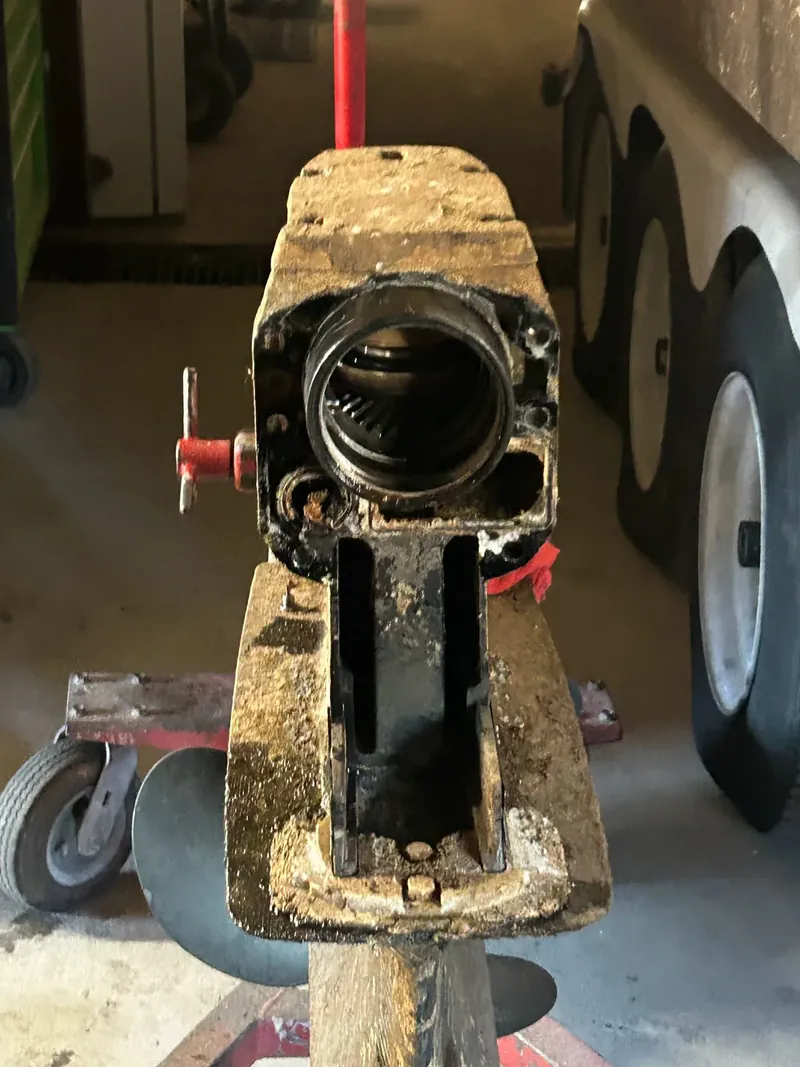
Short answer: Harbor Marine repairs sterndrives and outdrives on Lake Lanier boats, including damage from stumps and shallow water, in our Buford shop. Call or text (770) 967-8495.
What lives under Lanier
When Lake Lanier was filled in the 1950s, crews cut the trees but left tall stumps in place, and in some areas they still sit not far below the surface. When the lake drops, stumps, sandbars and shallow points come closer to the waterline, and floating limbs show up after storms. A sterndrive hangs lower than anything else on the boat, so it usually finds those hazards first.
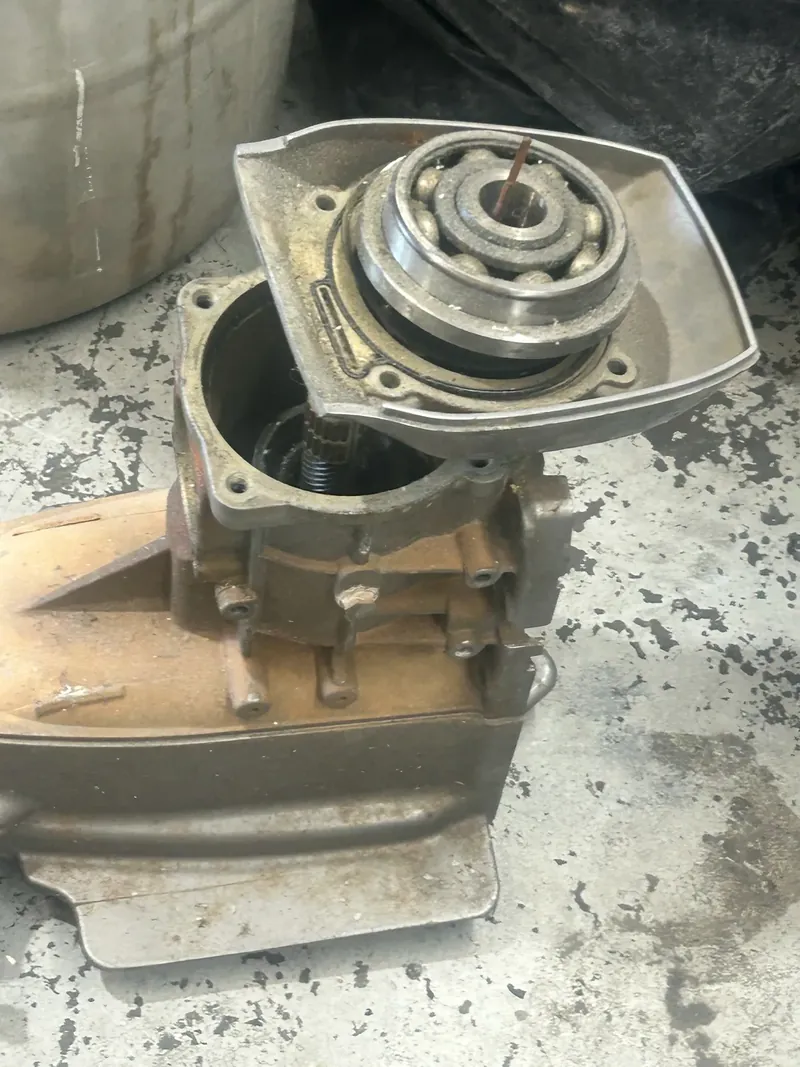
A strike does not have to be dramatic to cause damage. A bent prop, a cracked skeg or a knock that wears the gimbal bearing can all follow one bump you barely felt.
After a strike
- Look at the prop for bent, chipped or missing blades.
- Check the skeg and the bottom of the drive for cracks.
- Listen for new noise or feel for vibration that was not there before.
- Check the bilge for water you cannot explain.
If anything looks or feels different, have the drive inspected before the next long run.
Season-long water exposure
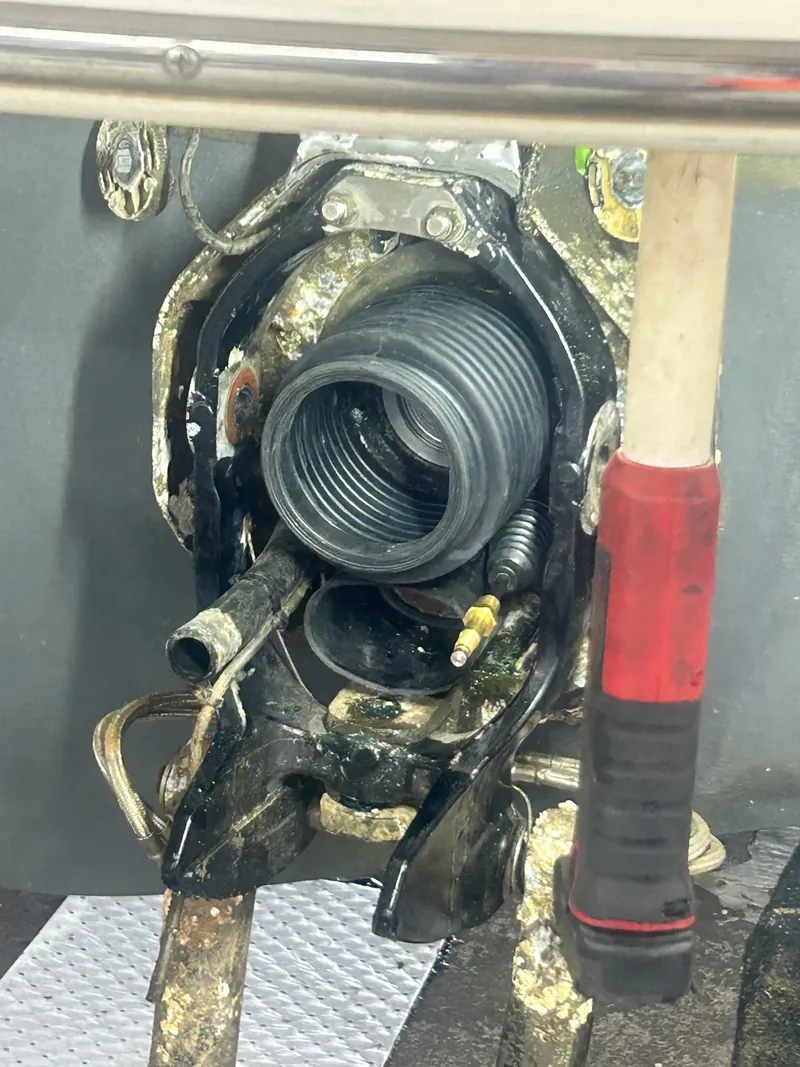
Plenty of Lanier boats stay in the water all season, and some longer. That is hard on the rubber bellows that seal the drive to the transom. They dry out and crack with age, and a torn bellows can let lake water reach the U-joints and gimbal bearing. The gimbal housing itself can corrode. Both are worth checking every year on a boat that lives in a slip.
Low water, high trim
When the lake is down, owners trim up more often to clear shallow spots near ramps and in coves. Running trimmed up puts different loads on the U-joints and drive. It is another reason to have bellows and joints checked when the water has been low for a while.
Running smart in low water
When the lake is down, stay in marked channels where you can, slow down near points and in coves, and watch for color changes in the water that signal shallows. Floating limbs are common after storms. If you do touch bottom, idle back to deeper water, check for vibration and look at the prop when you can. It is far cheaper to inspect a drive after a bump than to run it until something fails.
Gear lube and props
Changing the gear lube is one of the simplest ways to learn about the health of a drive. Clean lube is good news. Milky lube means water is getting in past a seal, and metal flakes point to internal wear. We check the lube during an inspection. We also look at the prop for the dings and bends that Lanier's shallow spots tend to leave.
Season-end inspections
Many Lanier owners have the drive inspected when the boat comes out for winter, so parts can be replaced before spring.
Getting the drive to the shop
Drive repairs need the drive pulled, so the boat comes to our shop at 6516 Lanier Islands Parkway in Buford. If it is in a slip, ask about boat transport on Lake Lanier. If the strike also left marks on the hull, we can handle that through gel coat repair on Lake Lanier at the same time.
Owners close to the shop can see sterndrive repair in Buford or Flowery Branch, and boaters on the Forsyth side can see Cumming. Our main sterndrive and outdrive repair page explains what we inspect. Contact us with questions.