What gel coat does, and why damage spreads
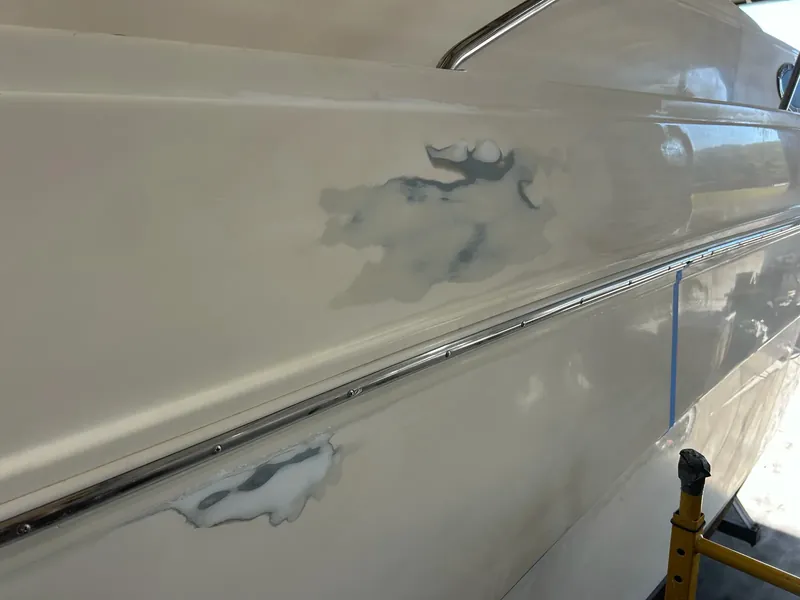
Gel coat is the thin, glossy outer layer on a fiberglass boat. It gives the hull its color and shine, but its real job is to protect the fiberglass laminate underneath from sun and water. Once that skin is chipped or cracked, water can reach the laminate and the edges of the damage start to lift and spread.
That is why a small chip near the waterline is worth fixing before the next season. On a lake boat that sits in a slip for months, the damage that starts as a cosmetic nick can turn into soft spots, staining or a much bigger repair.
The damage we see most
- Dock rash. Scrapes and gouges along the rub rail and hull sides from docks, pilings and lifts.
- Chips and dings. Small impact marks on the bow, transom and deck edges.
- Stress and spider cracks. Fine cracks around cleats, rails and corners where the hull flexes.
- Impact damage. Deeper gouges from hitting something under the surface, or from trailer and lift contact.
- Worn, chalky finish. Sun fades gel coat over time, leaving it dull and chalky.
If you are not sure whether the damage is cosmetic or deeper, send us a phone photo with the form. It helps us tell you what we are looking at before we see the boat.
How a gel coat repair works
Every repair is a little different, but most follow the same steps:
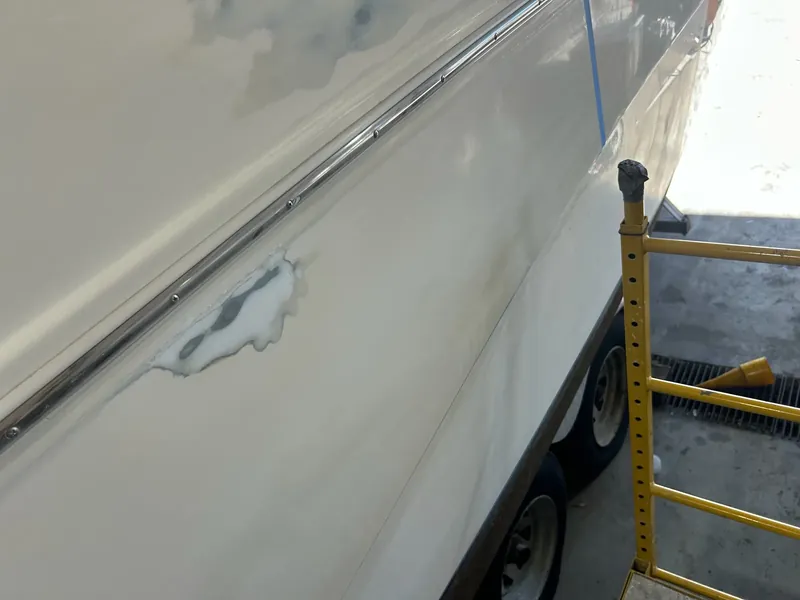
- Inspect. We check how deep the damage goes and whether the fiberglass under the gel coat is sound.
- Clean and open up. The area is cleaned of wax and grime, and the damaged edges are ground back to solid material so the repair bonds.
- Fill. Gouges are filled. Deeper damage gets fiberglass work first.
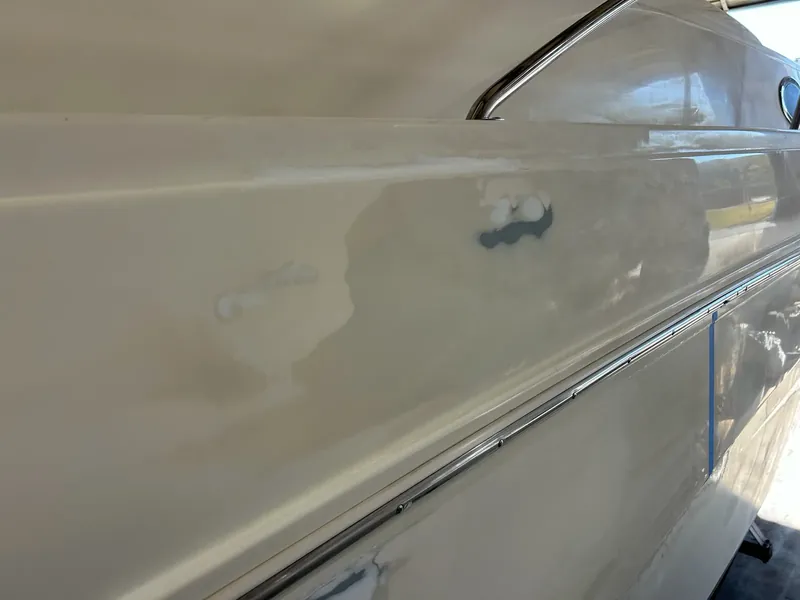
- Fair. The filled area is sanded and shaped so it follows the hull's original lines.
- Finish. Gel coat is matched to the hull color as closely as possible, applied, then sanded and polished to blend into the surrounding finish.
Older hulls that have faded in the sun can be harder to color-match. We will tell you what to expect before the work starts.
Fiberglass repair beyond the gel coat
When damage goes past the gel coat into the laminate, the fix is structural first and cosmetic second. That can mean grinding out cracked fiberglass, laying in new glass and resin, and rebuilding the shape before the gel coat goes back on. We look at the area around the damage too, because cracks near hardware or along the hull can point to stress that needs attention.
If the damage happened after a hard hit, it is worth having the drive and running gear checked at the same time. Our sterndrive and outdrive repair team works in the same shop.
At your dock or in our shop
Harbor Marine offers mobile service, and you can also bring the boat to our shop at 6516 Lanier Islands Parkway in Buford. Some small repairs can be handled where the boat sits. Larger repairs that need grinding, glass work and a clean finish usually make more sense in the shop, out of the weather. Tell us where the boat is and we will recommend the better option. If the boat needs to come in, ask about boat transport.
Gel coat repair near you
We repair gel coat and fiberglass for boaters across the lake and the towns around it. Owners on the water can start with our page on gel coat repair on Lake Lanier. Boaters close to the shop can read about gel coat and fiberglass repair in Buford, or see every service on our Buford boat repair page.
We also serve boat owners who keep their boats in or trailer from Flowery Branch, Sugar Hill, Gainesville and Cumming. That includes owners farther out in Suwanee, Alpharetta, Dahlonega and Atlanta who trailer to the lake.
Want the rest of the boat looked at while it is here? See our detailing and ceramic coating service, or contact us with questions.