Why Lake Lanier is hard on a hull
Lanier is a big, busy lake with a lot under the surface. When the U.S. Army Corps of Engineers built Buford Dam and filled the lake in the 1950s, crews cut the trees but left tall stumps behind. In some parts of the lake those stumps still sit not far below the waterline. When the water drops, stumps, sandbars and shallow points that were safely underwater start to show up, along with floating limbs that are hard to see, especially at dusk.
That combination is behind a lot of the fiberglass damage we see on lake boats: a scrape along the keel, a gouge at the bow, or a crack that started with one hard bump you barely felt.
Water levels move, and so does your boat at the dock
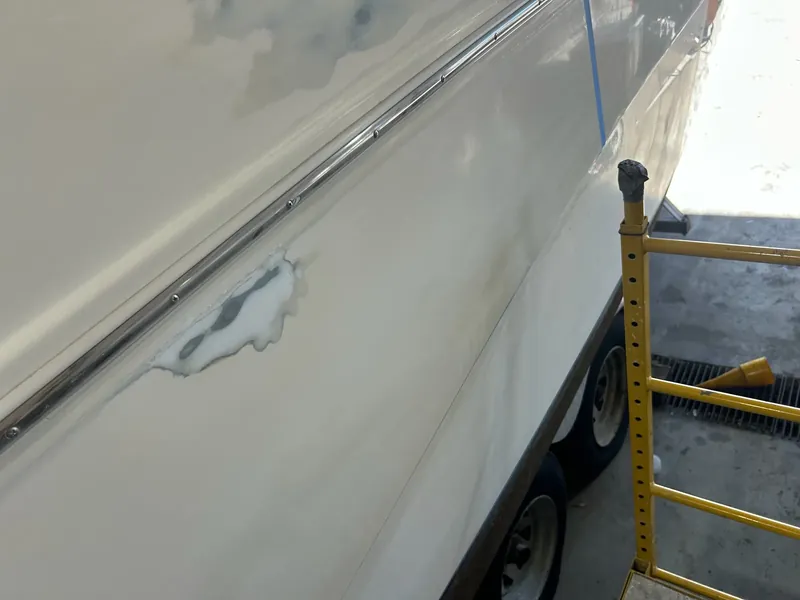
Lanier's full pool is 1,071 feet above sea level, but the lake rarely sits exactly there. It has dropped as low as 1,050.79 feet, in December 2007, and it rises again after heavy rain. As the level changes, dock lines, fenders and lift bunks no longer sit where they did, and hulls start rubbing in new places. Rub-rail scuffs, chafe marks at the waterline and chips at the bow are common after a season of shifting water.
If your boat sits in a slip, check the hull sides where fenders sit and where the boat touches the dock when the wind picks up. Catching that wear early keeps it a gel coat fix instead of a fiberglass repair.
Across five counties of shoreline
The Corps puts Lanier's shoreline at more than 692 miles, and the lake reaches into Hall, Forsyth, Dawson, Gwinnett and Lumpkin counties. Boats here live in very different setups: covered marina slips, private docks in quiet coves, lifts, and trailers that launch from the lake's many public parks. Each setup tends to produce its own kind of wear:
- Marina slips: fender and piling chafe along the hull sides and rub rail.
- Private docks and lifts: bunk and cradle marks, and scrapes from coming in at an angle in wind.
- Trailer boats: keel and bow damage from loading at the ramp, and chips from road debris.
Tell us how your boat is kept on the lake and we will know what to look for when we inspect it.
Repaired at your slip or in our Buford shop
Our shop is at 6516 Lanier Islands Parkway in Buford, near the south end of the lake by Lake Lanier Islands. You can bring the boat in, or we can come to it with our mobile service. Small chips and scuffs can sometimes be handled where the boat sits. Deeper gouges and fiberglass work, which need grinding, curing time and a clean place to finish, usually go better in the shop.
If the boat is in the water and needs to come out for the repair, we can help with boat transport on Lake Lanier.
What affects the repair on a lake boat
Pricing is set when you call for a quote. These are the things that change the scope of a Lanier repair:
- Depth. A gel coat chip is a much smaller job than damage that reaches the fiberglass laminate.
- Location on the hull. Damage at or below the waterline needs the boat out of the water.
- Color and age. Hulls that have spent years in Georgia sun fade, which makes color matching more involved.
- Access. Whether the boat is on a trailer, a lift or in a slip affects how and where we can work.
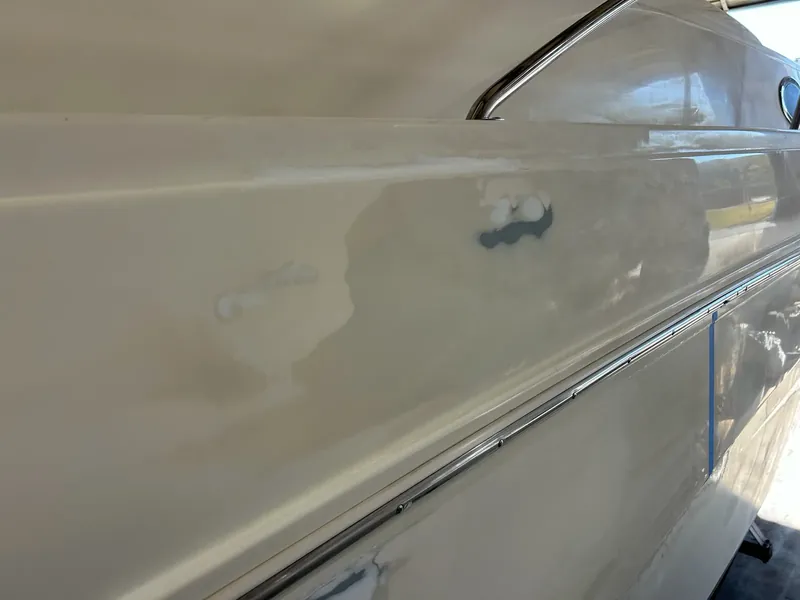
Hit something under the water?
If the damage came from a stump, rock or shoal, look past the hull. A hard strike can also bend a prop or damage the lower unit. While the boat is with us, we can check the running gear through our sterndrive and outdrive repair on Lake Lanier.
Boaters on the south end of the lake often come to us from Buford and Flowery Branch. Owners who keep their boats on the Forsyth side can see gel coat repair in Cumming. For how the repair process works in general, see our main gel coat and fiberglass repair page. If your boat is kept near the shop, our Buford boat repair page covers everything else we do. You can also contact us directly.